By Ghith Al-Karmi
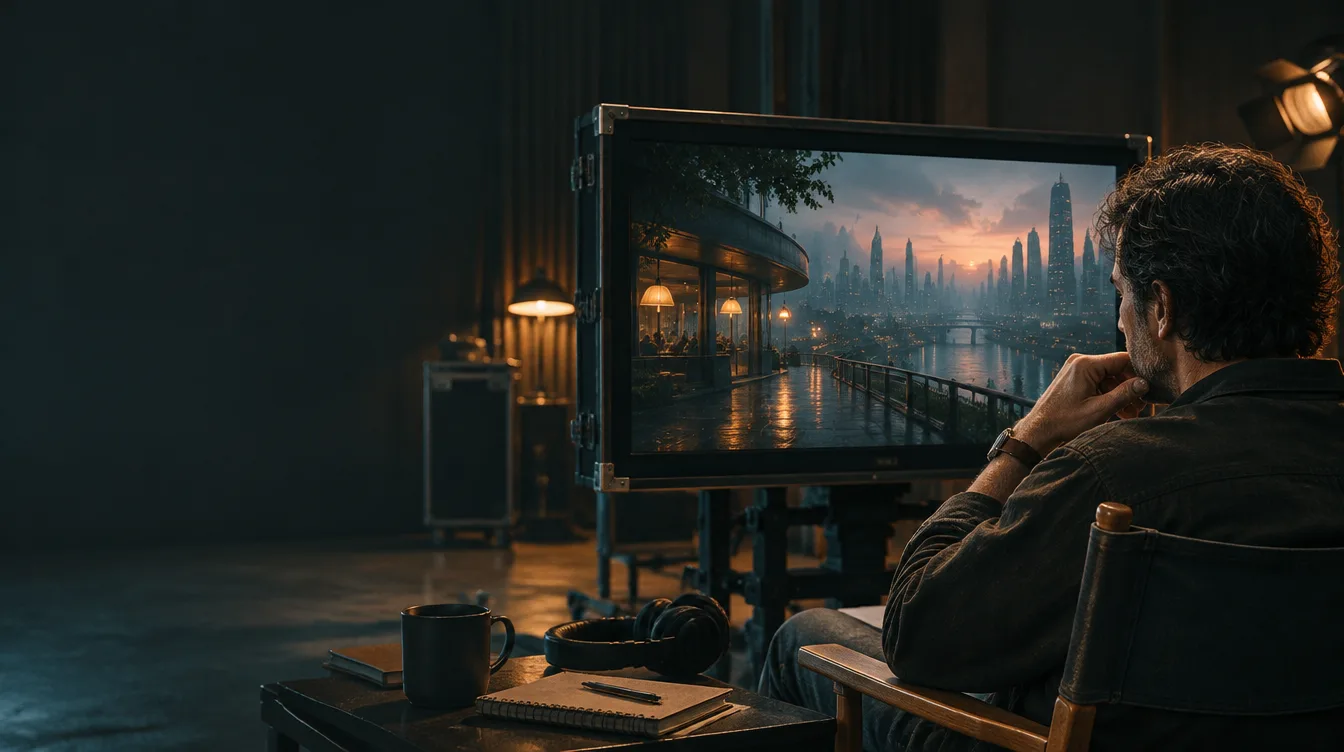
Imagine watching a cinematic scene of a city submerged in rain. The camera drifts slowly between buildings, light reflects off wet streets, and the imagery looks like it belongs in an expensive film production.
Then you discover that the entire scene was generated with artificial intelligence.
You might admire the details and immediately ask what tool produced them, or what prompt made the result possible.
But I have another question:
Is the scene beautiful because it looks cinematic, or because it says something worth watching?
To me, that question captures much of the debate about the future of creativity.
We are witnessing a shift that is impossible to ignore. Results that once required specialized equipment, experience, and considerable time can now be produced much faster with new tools.
Yet easier image-making creates a temptation to confuse the ability to make something visually impressive with the ability to make something creatively meaningful.
Those are not the same thing.
When Beautiful Images Become Available to Everyone
For years, reaching a certain level of visual production required a suitable budget, equipment, and a team with different skills.
Now someone at a computer can create scenes resembling work that previously demanded far more resources.
That matters, especially to independent filmmakers.
Someone with a science-fiction film idea but no budget to construct a futuristic city can now explore that idea visually before deciding how to produce it. A commercial director can test several visual directions and present a clearer concept to a client before production begins.
But when striking images become accessible to more people, spectacle alone may lose some of its power to distinguish a piece of work.
Imagine one hundred creators generating a car driving through a desert at sunset, with flawless lighting and cinematic movement. What makes one of those sequences different?
I don’t think the answer is simply image quality.
The difference lies in the idea carried by the shot, its place in the story, and the feeling it leaves with the viewer.
Does Having the Tool Mean Having the Vision?
There is a difference between knowing how to ask an AI system to generate a shot and knowing why the shot belongs in the film in the first place.
A director doesn’t choose a camera angle simply because it looks attractive. They choose it for what it does to the viewer’s relationship with a character or an event.
A close-up may reveal tension that dialogue never expresses. A wide shot may make a character feel isolated, even in a crowded space.
Sometimes deciding not to move the camera is more important than an elaborate movement that calls attention to itself.
These aren’t isolated technical details. They are part of a coherent visual language.
AI may help us execute those choices or propose alternatives. It does not relieve us of the responsibility to decide what we’re trying to say.
Consider a hypothetical car advertisement.
You could ask for a car racing through mountain roads, dust swirling, dramatic lighting, and energetic music. The result might look compelling.
But what if the message is about a family’s comfort on a long journey?
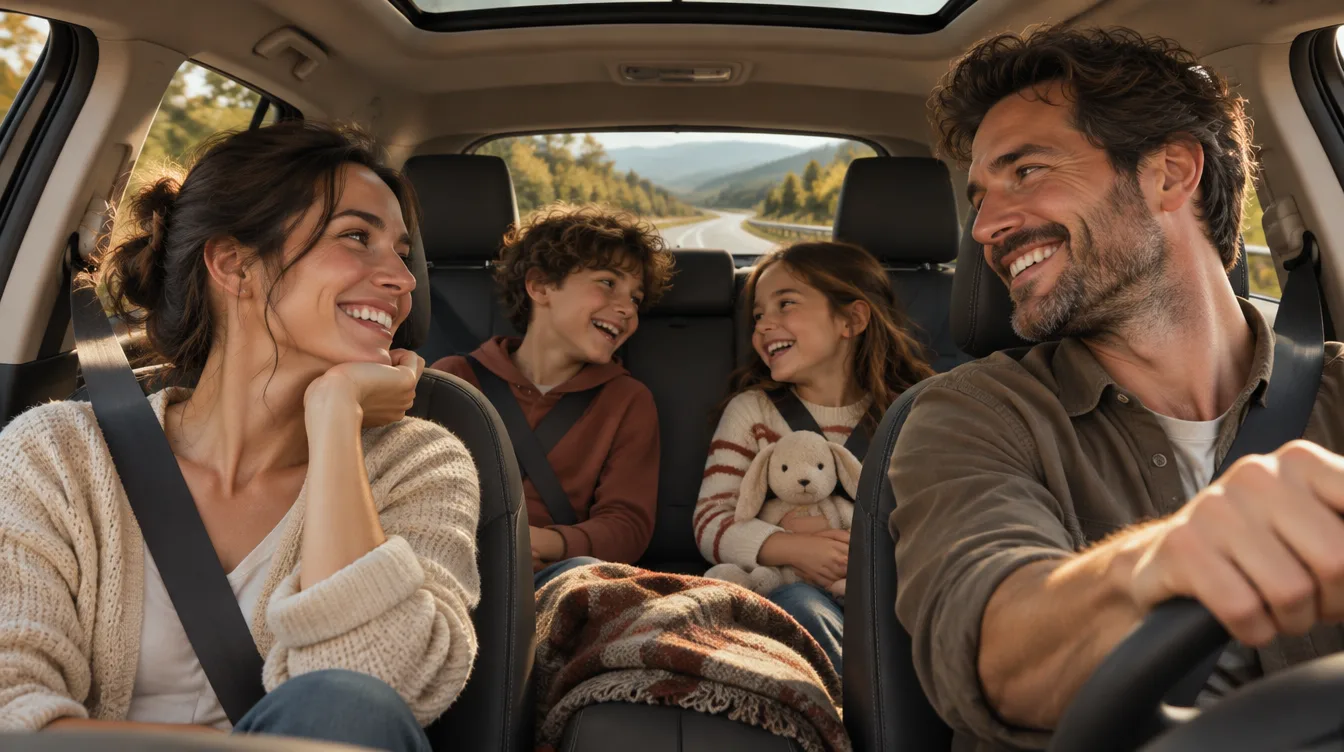
A quiet shot inside the car showing a natural interaction between family members might communicate that message better than ten spectacular chase shots.
The director doesn’t choose the most impressive shot. The director chooses the shot that serves the purpose.
That is where creative vision becomes valuable: knowing what to include, what to leave out, and why.
Is AI Really Threatening Creative Jobs?
It would be easy to say AI is just another tool and creative professionals have nothing to worry about.
I don’t think that accurately describes what’s happening.
Parts of tasks that once took hours can now be completed faster. That may change how services are priced, how production teams are organized, and which skills clients are willing to pay for.
If someone’s entire professional value lies in executing a technical task that can be automated, it is reasonable to expect pressure as tools improve.
That isn’t a small concern, and it cannot be dismissed with a motivational slogan about the irreplaceability of human creativity.
At the same time, research presents a more complicated picture than the simple disappearance of creative work. AI can redistribute tasks while human judgment, coordination, and evaluation remain important. [1]
For anyone who works in content production, I think the central question is becoming this:
What value do I offer when part of my work becomes faster, easier, and cheaper to execute?
If my answer is only that I know how to operate a particular application, I need to think again.
But if my value comes from understanding audiences, developing ideas, building stories, and making appropriate visual decisions, those are skills worth sharpening regardless of the tools we use.
From Operator to Creative Decision-Maker
I see AI pushing us toward an important change in creative work.
Instead of spending most of our time executing technical details, directors may have more room to explore ideas and test possibilities.
But it doesn’t happen automatically.
Owning dozens of tools can complicate your process if you don’t have a clear vision directing their use.
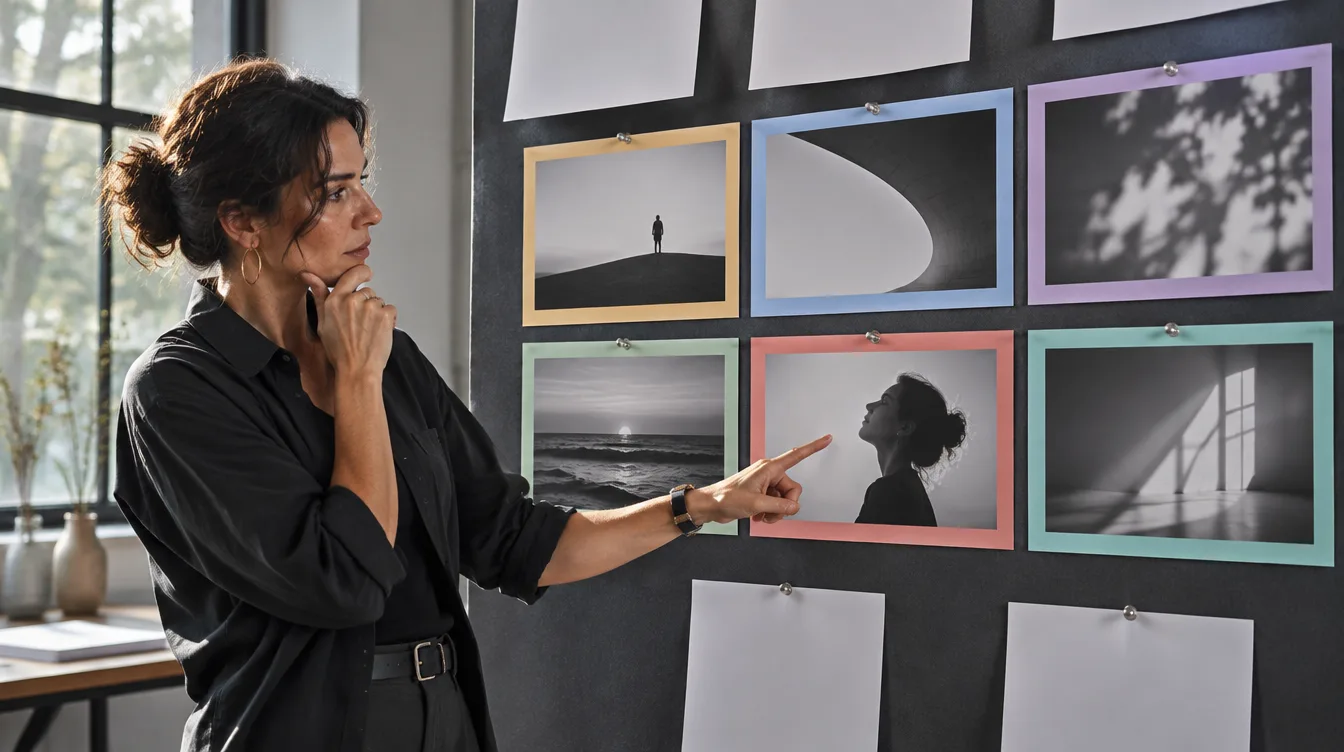
You can generate fifty images for one concept, spend hours comparing them, and finish without making a decision.
More options do not necessarily produce better choices.
In my view, a good director isn’t the person who can generate the greatest number of shots. It’s the person who knows which shots the work actually needs.
More importantly, they know when a result isn’t right even when it looks technically beautiful.
The ability to evaluate, challenge, and revise may become even more valuable as generation becomes easier.
Filmmaking Is More Than Moving Pictures
There’s another part of this conversation we cannot ignore.
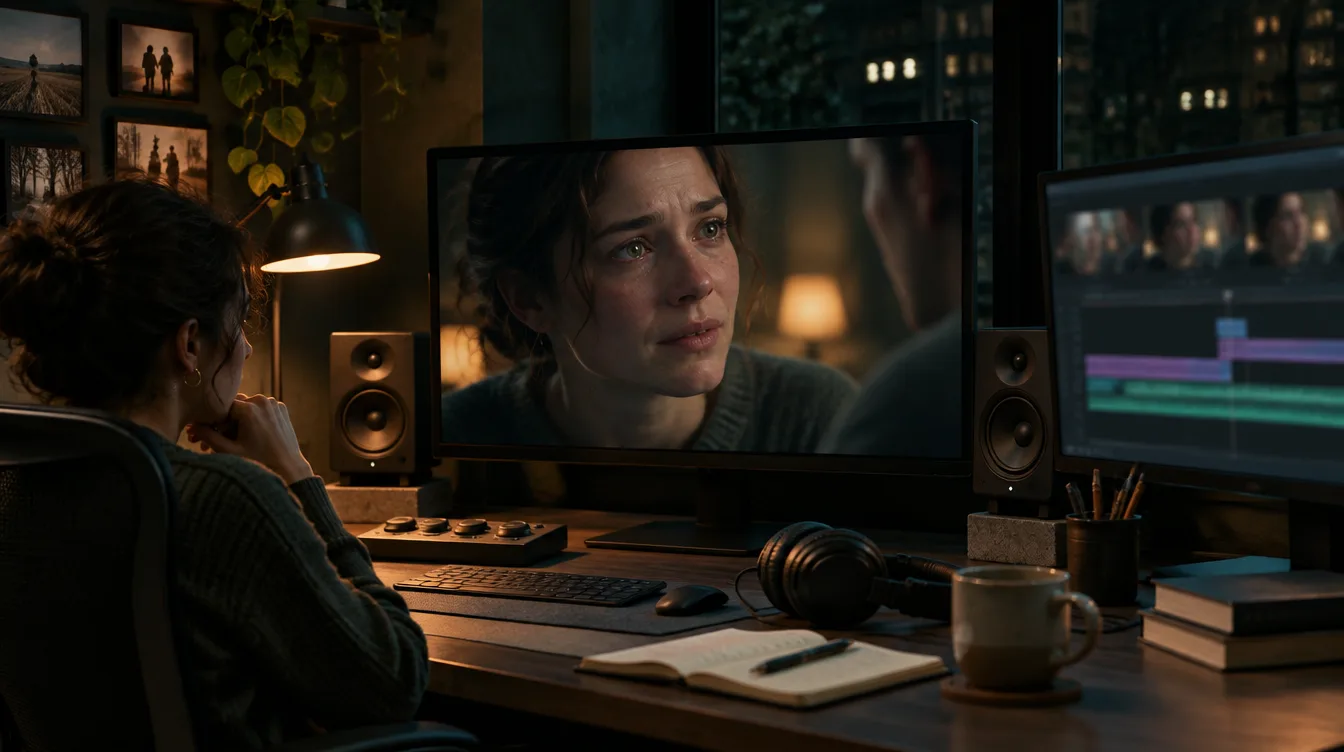
A film is not simply a collection of attractive images arranged on a timeline.
Film involves rhythm, performance, sound, silence, character development, and a relationship built over time between the work and the audience.
An AI system might produce a spectacular individual shot. That doesn’t automatically mean it can maintain a coherent character performance across multiple scenes, develop convincing drama, or grasp every cultural and human detail that gives a story its meaning.
Making a complete film requires many interconnected decisions.
We shouldn’t judge a technology’s ability to create a film solely by the quality of a brief clip on social media.
At the same time, I see no reason to assume the limitations of today’s tools will remain unchanged.
Technology evolves quickly. What seems difficult now may become easier in the coming years.
So defending the director’s role shouldn’t depend on the assumption that machines will always be incapable of certain tasks.
It should depend on how a director’s value evolves with the industry.
And What About Creators’ Rights?
We cannot discuss AI’s creative future without discussing ownership and rights.
Where did the training data come from? What are acceptable limits on using other people’s work? When does a new output qualify for copyright protection?
These are genuine questions, with ongoing legal debate and changing rules.
In a report published in 2025, the U.S. Copyright Office explained that using AI as an aid does not automatically prevent copyright protection for human-authored elements. Protection depends on the nature of the human creative contribution, under U.S. law. [2]
It is a reminder that access to powerful tools does not remove our professional responsibility toward people whose work and rights may be affected.
To me, filmmaking’s future requires not just more capable tools but clearer, more respectful creative practices.
Will AI Reveal the Real Creator?
I’m uncomfortable dividing people into “real” and “fake” creators based on the tools they use.
A beginner may have an excellent vision and finally find a way to express it through AI. Meanwhile, an experienced professional may own costly equipment and possess decades of technical knowledge yet make conventional work that says nothing new.
Technology doesn’t give us the right to judge people’s worth.
But it may make the distinction between execution skills and creative vision more visible.
As barriers to production fall, the questions that come before production matter more.
Why are we making this?
Who are we making it for?
What do we want the audience to feel?
And what makes this idea worth the viewer’s time?
Those are the questions I want guiding the creative process, whether we use a cinema camera, 3D software, or a generative AI model.
I don’t see creativity’s future as a battle between humans and machines. I see it as a test of whether we can use stronger tools without losing sight of what we want to say.
Making a cinematic shot may become easier than ever.
That doesn’t necessarily make making a good film easy.
Because the question that matters to me in the end isn’t: How did you create this image?
It’s: Why did you want me to see it?
Supporting sources
[1] Adobe, The Future of Creative Work, Vol. 1: How AI Is Redistributing Creative Work, June 2026.
[2] U.S. Copyright Office, Copyright and Artificial Intelligence, Part 2: Copyrightability, January 29, 2025.
Additional industry context: Runway and Lionsgate Expand Partnership, 2026.
Adobe Creators’ Toolkit Report, June 2026.