By Ghith Al-Karmi
This piece follows my earlier article, “Will AI Kill Creativity—or Reveal What Makes a Creator?”, and widens the question from filmmaking to design, code, and game development.
Imagine watching a car commercial. It opens over a rain-soaked city, cuts to a mountain road disappearing into fog, and ends on a beautifully lit hero shot accompanied by stirring music. You might admire the cinematography before discovering that most of the images were generated by AI, perhaps by someone who has never used a cinema camera.
Has that person become a director? Did the tool give them an artistic sensibility they didn’t have? Or have we confused the ability to produce impressive images with the ability to make a compelling film?
For me, the most interesting question is no longer whether AI can generate images, code, or designs. We know it can. The harder question is who decides what should be made, why it should exist, and whether the result has something worth saying.
I approach this as someone who has spent years working in photography, directing, and advertising—and who has since experimented with generative tools and game development. I’m neither interested in dismissing the technology nor in celebrating every polished output. I see enormous potential, alongside an easy trap: mistaking faster execution for better creative thinking.
Lowering the Barrier Is a Real Achievement
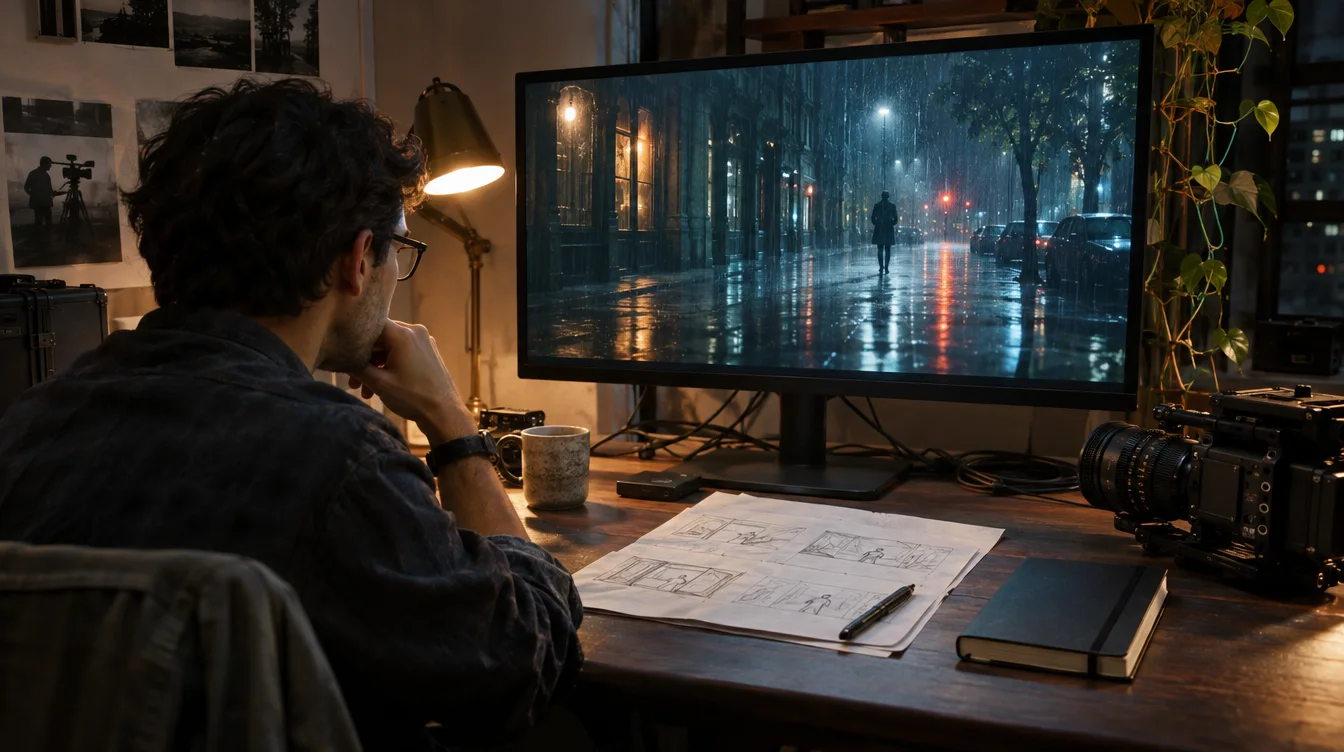
Not long ago, an independent filmmaker imagining a science-fiction story had to confront a formidable list of obstacles: locations, sets, visual effects, crew, and money. Now a creator can explore worlds, develop visual references, and test possible scenes before committing to a production.
That is genuinely exciting. Creative expression should not be reserved for people who can afford expensive equipment or large teams. Some people have remarkable stories but have never had the resources to make them visible. New tools can give those people a starting point.
But removing an obstacle is not the same as finding a direction.
If a thousand people can generate a neon-lit futuristic city, the city itself stops being the reason to watch. What matters is who lives there, what is at stake, and what the audience is meant to feel. The same technology that opens the door to expression can also make easy spectacle feel commonplace.
Creativity is not simply the ability to make something. It is the ability to make choices that give the thing a reason to exist.
A Director Is Not Just Someone Who Can Request a Beautiful Shot
Sometimes the hardest creative decision is rejecting a beautiful shot.
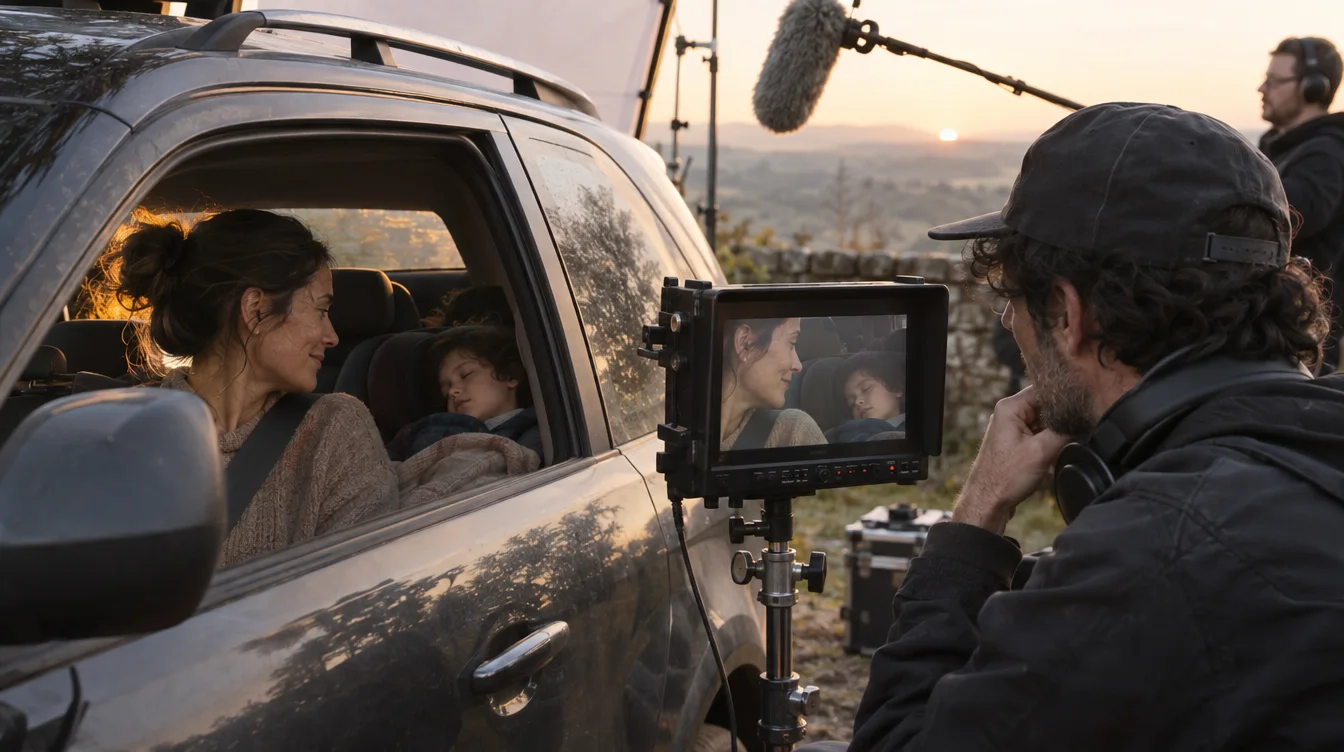
Picture a commercial about a family’s sense of safety on the road. One option is an exhilarating chase sequence. Another is a quiet moment: a parent glancing at sleeping children in the back seat as morning light moves across the dashboard. The chase might win attention in a scrolling feed. But which scene actually communicates the message?
Directing happens in that decision. It involves understanding purpose, emotion, rhythm, and the relationship between shots. A tool can provide variations. Someone still has to decide which variation belongs in the story—or whether none of them does.
A complete film makes that responsibility even greater. Performance, pacing, silence, sound, character, and continuity all shape the audience’s experience. An individual shot can be visually perfect and still weaken a scene because it doesn’t belong to the same emotional world.
That’s why I’m reluctant to judge a director by five impressive seconds on social media. I’d rather see whether they can sustain a coherent experience and recognize the moment when adding another effect would make the work worse.
Designers and Game Developers Face the Same Question
The distinction between operating a tool and making creative decisions extends beyond film.
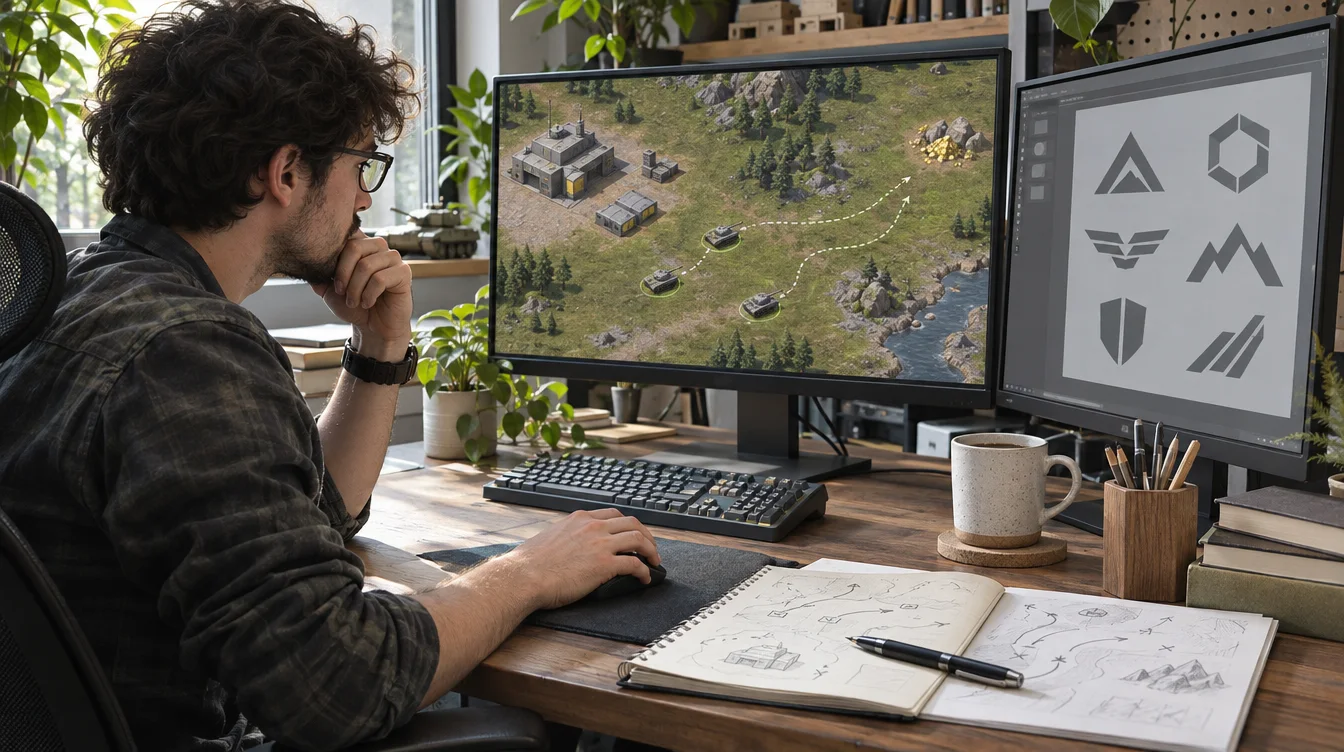
An image generator might offer twenty logo concepts in minutes. Yet a designer isn’t valuable merely because they can produce a stack of attractive options. Their work involves understanding an audience, a business, and the many places a visual identity must function: storefronts, packaging, apps, and tiny icons. A logo can look magnificent at full size and fall apart in practical use.
Software and game development make the point even clearer. AI can write substantial amounts of code. I use these capabilities while exploring game development myself. But a functioning script is not the same as a satisfying game. A tank may move on screen, yet still turn unnaturally. Units may follow a command but get stuck at corners. A game can run and still fail to communicate why the player won or lost.
Those are problems of design, testing, systems thinking, and judgment. Generating code is only one part of solving them.
None of this means beginners are somehow disqualified from being creators. In fact, the opposite may be true. A person with little technical training may finally have the means to express an exceptional idea. Experience matters, but it doesn’t grant anyone exclusive ownership of imagination.
More Options Don’t Always Mean More Originality
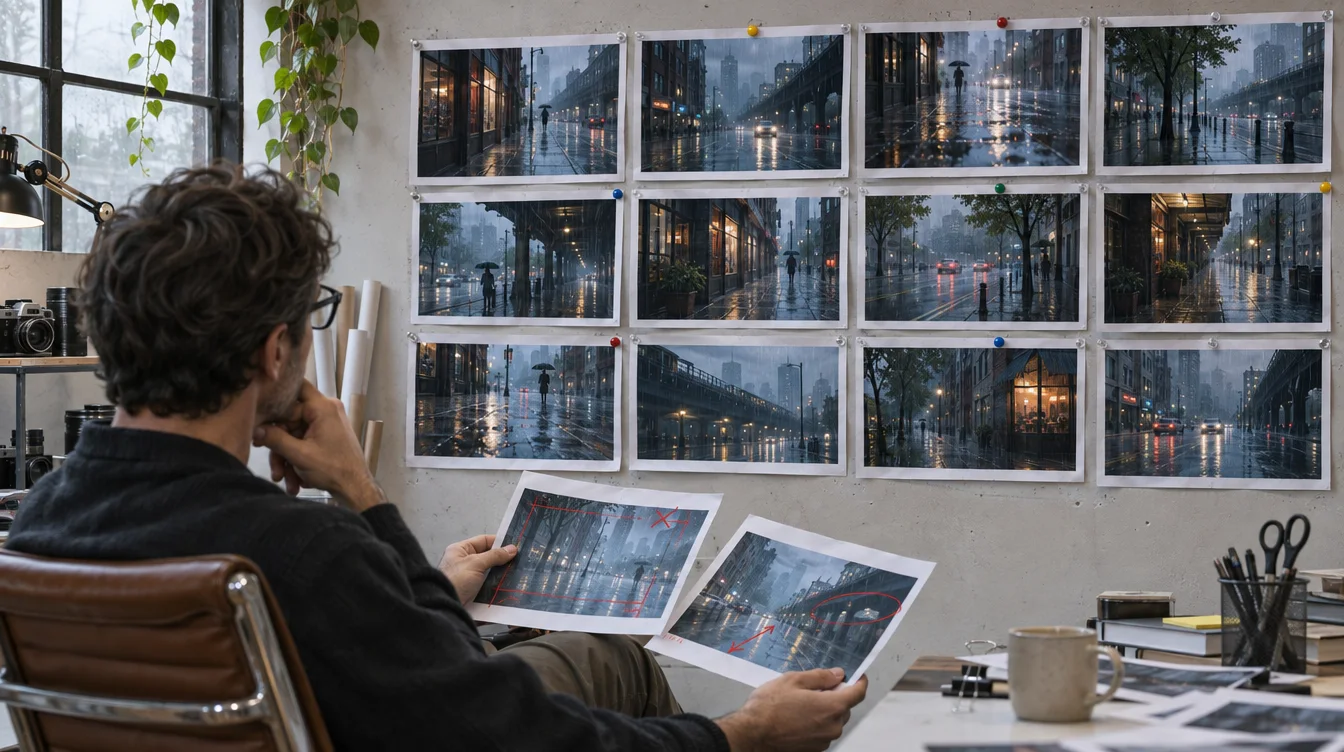
One of the most seductive things about generative tools is how easily they multiply possibilities. Ask for one concept and get several. Choose one, refine it, and discover more alternatives. Before long, you can spend hours comparing versions without committing to a direction.
We have made the generation of options easier. We haven’t necessarily made decisions easier.
There is research that gives this tension some substance. In a 2024 Science Advances experiment, Anil Doshi and Oliver Hauser found that access to generative-AI ideas could improve evaluations of individual short stories, while reducing the diversity of stories across participants. This was a particular writing experiment, not proof that all AI-assisted art converges on the same result. Still, it raises a useful question about what happens when many people begin from similar suggestions. [1]
If creators follow the default ideas of a system without challenging them, polished results can start to feel familiar. Originality may require asking a different question, rejecting the easy answer, or stepping away from generation altogether.
Another study of AI-assisted design found that the benefits depend on both expertise and the stage of the process. AI could help with ideation, while its use during implementation did not automatically improve outcomes and could slow some experienced designers. The lesson isn’t that professionals should avoid AI. It’s that good use involves knowing when a tool is helpful—and when it is getting in the way. [2]
Is Traditional Creative Knowledge Still Worth Learning?
Absolutely. But we may need to think more carefully about what deserves priority.
Someone who wants to make a film doesn’t necessarily need to begin by buying an expensive camera. Someone building a game doesn’t necessarily have to write every line of code unaided. But understanding composition, editing, performance, character, user experience, or game balance gives creators a much stronger language for directing the tools they use.
Once you understand why a particular scene works, you can ask for more than a ‘cinematic shot.’ You can articulate its purpose, its emotional tone, what should remain out of frame, and how it prepares the next scene.
And while AI may shorten some production steps, it doesn’t automatically replace the growth that comes from making mistakes, taking criticism, studying great work, and testing ideas with real audiences.
In my view, the skill worth cultivating isn’t simply writing increasingly elaborate prompts. It is judgment: the ability to select, revise, reject, and take responsibility for the finished work.
Authorship and Responsibility Still Matter
We also need to talk about rights. Generating an image doesn’t resolve the questions around training data, the use of other people’s material, appropriate disclosure, or ownership of the finished work.
In its 2025 report, the U.S. Copyright Office explained that using AI as an assistive tool does not automatically prevent copyright protection for original human-authored contributions. The analysis depends on the nature of that human contribution. This is a statement about U.S. copyright law, not a universal rule for every country or project. [3]
For me, professionalism includes respecting other creators, being clear with clients where appropriate, and checking the rights and terms connected with the tools and assets in use. Speed is not a convincing excuse to ignore responsibility.
So, Does AI Reveal the Creator?
I don’t particularly like dividing people into ‘real’ and ‘fake’ artists based on the equipment or software they use. A beginner might have an extraordinary point of view. An experienced professional might have extraordinary tools and produce work that has very little to say.
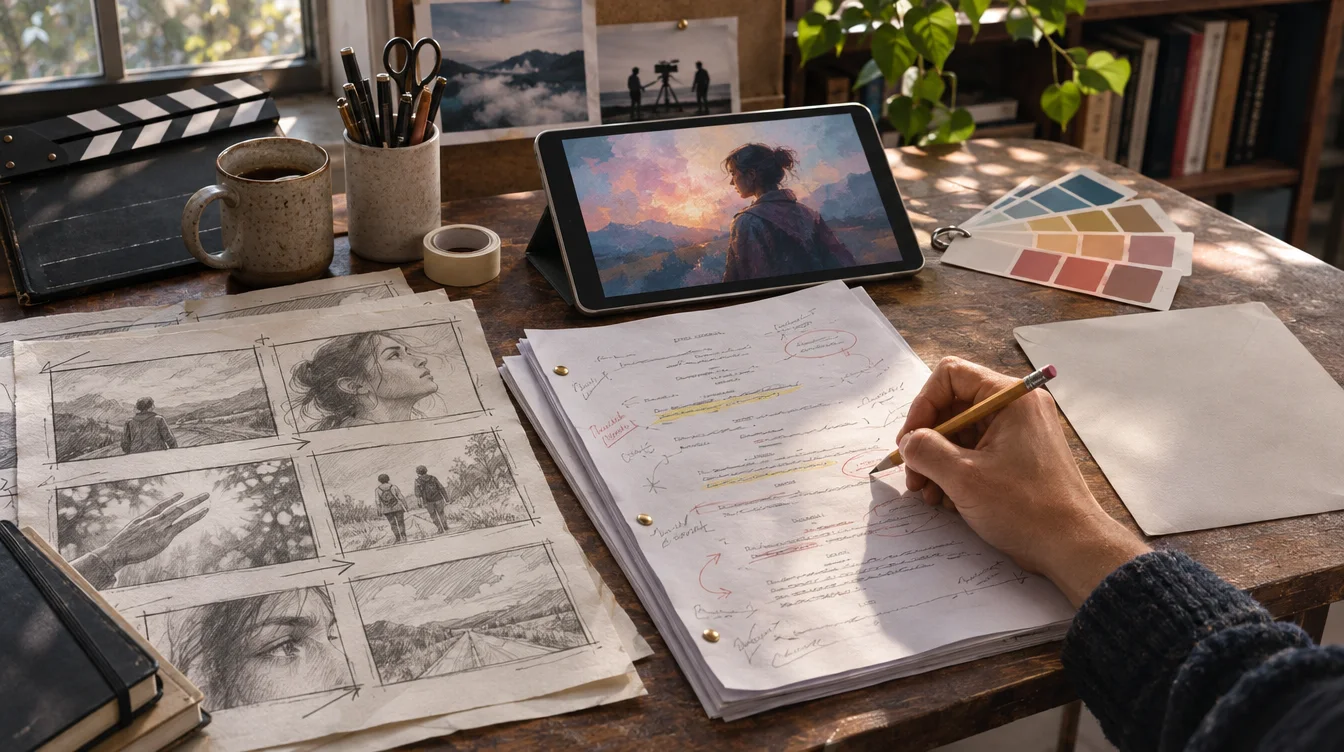
Still, AI makes an old question harder to avoid: What do you personally contribute to the work?
Is it an idea? A sensitive understanding of an audience? A better way to tell a story? The confidence to remove a spectacular sequence because it doesn’t belong? Or is the entire appeal of the work that the tool produced something visually impressive?
I’m excited by the possibility of making films, interactive experiences, and games that once felt beyond my available resources. But I don’t want to become someone who endlessly tests tools and forgets why the project mattered in the first place.
AI doesn’t create a thoughtful artist out of nothing, and it doesn’t prove that a newcomer has nothing to contribute. It expands what people can try. What they do with that freedom still depends on the questions they ask, the decisions they make, and the work they are willing to refine.
A beautiful shot may become easier for almost anyone to produce. An experience that stays with a viewer or a player still takes care, iteration, and a point of view.
The question I want to ask isn’t ‘Which AI tool did you use?’ It’s ‘What did you want the person on the other side of the screen to feel?’
Sources and Further Reading
- Doshi, A. R. & Hauser, O. P. (2024). Generative AI enhances individual creativity but reduces the collective diversity of novel content. Science Advances.
- The Double-Edged Roles of Generative AI in the Creative Process: Experiments on Design Work. Information Systems Research (2025).
- U.S. Copyright Office (2025). Copyright and Artificial Intelligence, Part 2: Copyrightability.
Note: Scenes introduced with “imagine” are illustrative scenarios, not claims about specific commissioned projects.